Working With Animals: A Vet Reveals What It’s Really Like
 Claudia Reiners
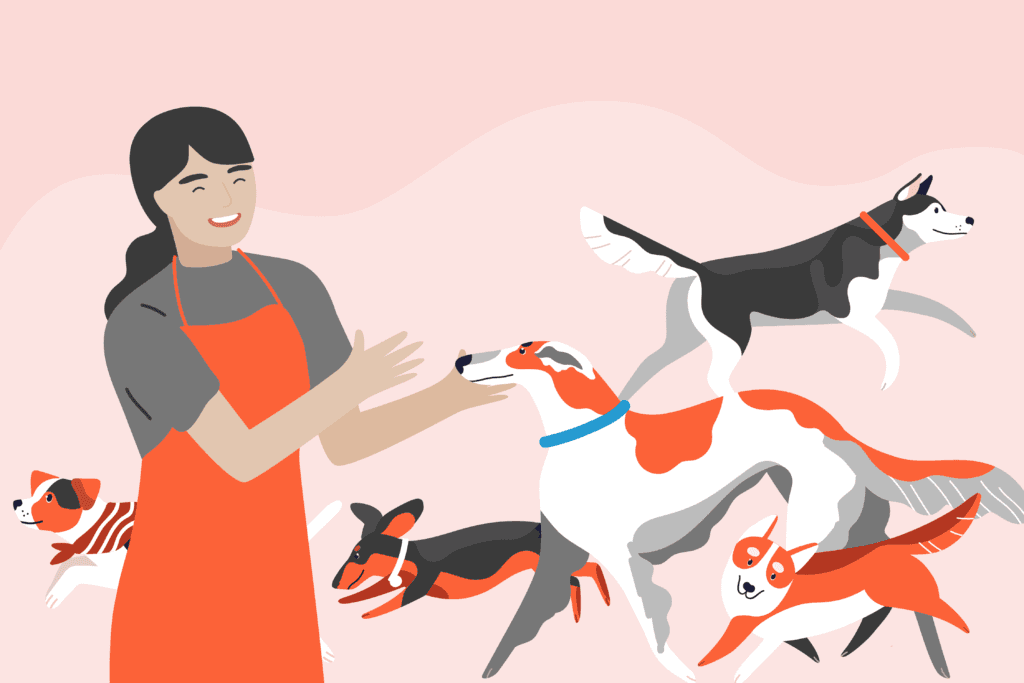
Do you dream of working with animals, but you’re not sure if it’s right for you? Animal jobs are your chance to get up-close and personal with all kinds of cute and creepy critters. Depending on what path you choose, you could be doing anything from dog dentistry to snake handling to caring for farm horses.
The range of career paths in animal care is wide, spanning:
- Veterinary nursing
- Veterinary medicine
- Animal agriculture
- Zookeeping and conservation
- Pet grooming
- Dog training
There’s a wealth of exciting opportunities out there for animal lovers. But how do you know if this career is the right fit? Dr. Alix Lightfoot, a vet working in Geelong, Victoria, shares what it’s really like working with animals all day long.
Were you made to work with animals? Read on to find out.

You’ll connect with animals
Like most people who work with animals, Alix has always been fond of our furry, scaly, and feathered friends. In her early teens, she harboured ideas of becoming a vet. And while her interests later took her down a scientific track, working in a human pathology lab, she returned to the idea of veterinary science when her career stalled.
After earning a veterinary degree in New Zealand, she counts being around animals as one of the most enjoyable parts of her job. “It’s nice being with cute, cuddly animals,” she says.
“I like ferrets. I just think they have amazing personalities, they’re really fun — it’s just a pity they smell so bad!” Alix laughs. “And I think rats are probably the other one. They’re like little mini dogs. They really like people.”
Human-animal communication can be a challenge, but Alix is up for it. “The puzzles are not being able to ask someone what’s going on and trying to piece it together.”
“When you have an animal that’s a bit anxious about what’s going on, [you] work with them to get to the point where they’re a little bit more relaxed. You try to make what is probably a terrifying experience for a lot of animals as nice as you can make it. It gives you a nice feeling.”
You never quite know what’s coming next
“I have two types of days: surgery days or consult days,” Alix says when asked about a typical day.
Consult days are “exactly what they sound like”: a day full of consultation appointments that run for around 20 minutes each. In each consult, depending on the situation, she’ll:
- Examine the animal
- Run some tests
- Dispense medication
- Recommend treatment
- Provide information
In between consults, she’ll catch up on administration tasks or answer clients’ questions over the phone — or deal with emergencies as they crop up.
“[There are always] things that weren’t booked in but just have to be dealt with — because they’ve eaten poison or been hit by a car or whatever. So you have to work that in amongst all your other stuff.”
“And then I have surgery days,” she says. While some surgeries take longer than others, she averages between three to nine surgeries in a day. For each surgery, she’ll have an appointment to discuss what will happen and the risks involved.
“We usually try and do ‘clean’ surgeries first, things that are highly sterile: spays and lump removals, and then work down to ‘dirty’ procedures like dental work.”
During procedures, Alix will work with two veterinary nurses. One helps directly with the procedure, while the other helps to recover patients.
Things can be straightforward, but it’s hard to tell in advance. “If they’re routine surgeries and we don’t get any emergency stuff on top, then you get it all done and everything nicely packages up when you leave work.”
“Both sorts, if you get into really complicated stuff going on then it’s really hard to tell how long things are going to take.” She says that dental work, in particular, can throw up a lot of unknowns. Hidden problems can lurk beneath the surface, and a 15-minute teeth cleaning can turn into extracting eight teeth over two hours.
Typical emergencies — and the other kind
When emergencies come through the front doors of Alix’s practice, she will usually triage them, get them stable, and refer the animal to the nearby animal hospital in Newcombe. This keeps things more manageable at the vet clinic.
Working at an animal hospital, on the other hand, can be unpredictable. She’ll occasionally work an emergency shift there. “It’s quite interesting dealing with that particular shift because you never know what’s turning up!” she says.
Alix says there are (what vets call) “typical emergencies” that they see often.
“When it comes to dealing with those problems — emergency C sections, and those types of things — although they might be a little bit high stress, at least you know we can do this.”
And then there are the complete wildcards: the ones where you’re racing against the clock, and you have no idea what’s going on. “I think you have to be a particular type of person to deal with those situations.”
The pressure and chaos of emergency cases aren’t for everybody, but your choice of workplace will play a big part in your experience. “You can never 100% rule it out… but you can certainly make it far less likely working in small practices.”
Different paths for different preferences
Alix acknowledges that veterinary work isn’t for everyone, and emphasises the variety of roles out there.
“Think about what it is that you actually want out of that job,” she advises. “If you want to deal with cute, fluffy animals all the time, you’re probably going to be in a veterinary job. In which case, can you actually deal with it when bad things happen?”
On the other hand, if you’re looking for a job with less human interaction, you could consider production jobs. Examples might include working on a horse stud farm or working with chickens. “You tend to have less of a relationship with individual animals, but also don’t need to deal with people,” Alix says.
Whichever path you choose, lateral thinking will come in handy. You can’t always apply the same solution to every animal and expect the outcome to be the same.
“Unfortunately, not all animals read textbooks or behavioural books. So they don’t always react to things in the way that you’d expect them to.”
Depending on where you’re at in your career, there are avenues for anyone who loves creatures to start a career working with animals. “There’s the opportunity for people to have essentially no qualifications to do low-end, more physical work,” she says. That can be a great opportunity to get a sense of the industry or to get your foot in the door.
“At the other end of that, do you want to have a full degree or be a researcher, do your Masters, do your PhD, become a specialist?”
Get your hands dirty
The realities of vet medicine, and working with animals in general, is that it isn’t all cuddles and saving lives. For starters, there’s a substantial amount of cleaning involved. “You have to have a fairly good stomach for all the gooey stuff,” Alix says.
“You’re going to have to deal with a lot of people, and you’re going to have to clean up a lot of gross stuff.”
If you’re considering getting into a veterinary or animal care job, giving it a try is essential. That’s the only way to truly grasp what your job will be like, day in and day out.
Alix says that students doing work placements at the clinic don’t always get the clearest picture of what the job will involve, and suggests getting as involved as possible on your placement.
“What is it that people are doing all the time? Not just the fun stuff, the exciting stuff that everyone wants to have a go at. But actually having those conversations, ‘What is it that you actually do for 90% of your day?’ and working out what level you want to be at.”
Getting a clear picture of what your future would look like in animal care is an essential step on your new career journey.
Now that you’ve seen it from the inside, why not try it for yourself? A short course in animal care can be a great way to learn the basics. Plus, you’ll take on a work placement, where you can experience the industry first-hand.