How to Become a Medical Receptionist in Australia: Courses, Pay and Career Paths
 Kristen Michaelides

Every clinic runs on its front desk. Medical receptionists keep appointments on track, reassure patients, and free up doctors to focus on care. If you’ve got admin or customer service experience, you’re closer to this career than you think.
The quick answer: you don’t need a formal qualification to become a medical receptionist in Australia, but most employers prefer candidates who know medical terminology and practice systems. A Certificate III in Health Administration or a short medical reception course can get you job-ready, and you can study online around your current job.
Here’s what the role involves, what it pays and how to get there.
How to become a medical receptionist in 4 steps
1. Build on what you’ve already got
Experience in admin, retail, hospitality or customer service gives you a head start. Phones, scheduling, payments and difficult conversations are already part of your toolkit.
2. Learn the medical side
A short course in medical terminology or medical reception, or a Certificate III in Health Administration, covers the language, systems and privacy rules clinics expect you to know.
3. Get familiar with practice software
Many Australian clinics use systems like Best Practice, MedicalDirector or Genie. Some courses include them, or you can pick up the basics through free tutorials.
4. Apply and get your foot in the door
Look for receptionist roles at GP clinics, specialist rooms, dental and allied health practices, and hospitals. Casual or part-time roles are a great way to gain experience while you finish studying.
What does a medical receptionist do day-to-day?
You’re the first person patients see when they walk into one of many health facilities, from GP clinics and hospitals to allied health practices. A solo GP clinic and a busy multi-practitioner centre will feel different, but the core of the job stays the same:
Supporting doctors, the practice manager and admin staff with filing, scanning and other clerical tasks with any previous work experience in office administration, such as an administrative assistant.
- Welcoming patients and visitors and pointing enquiries to the right person
- Answering and transferring phone calls
- Booking new appointments, confirming appointments by phone or SMS, and rescheduling when plans change
- Processing Medicare claims, private health rebates and other payments
- Keeping patient files and records accurate and up to date
- Handling emails, messages, mail and correspondence
- Resolving patient complaints calmly and professionally
- Arranging travel or bookings for visiting specialists when needed
- Keeping the reception area tidy and welcoming
What skills does a medical receptionist need?
Good news: if you’ve worked with people before, you probably have half of these already. The rest you can learn through a course and sharpen on the job.
People skills
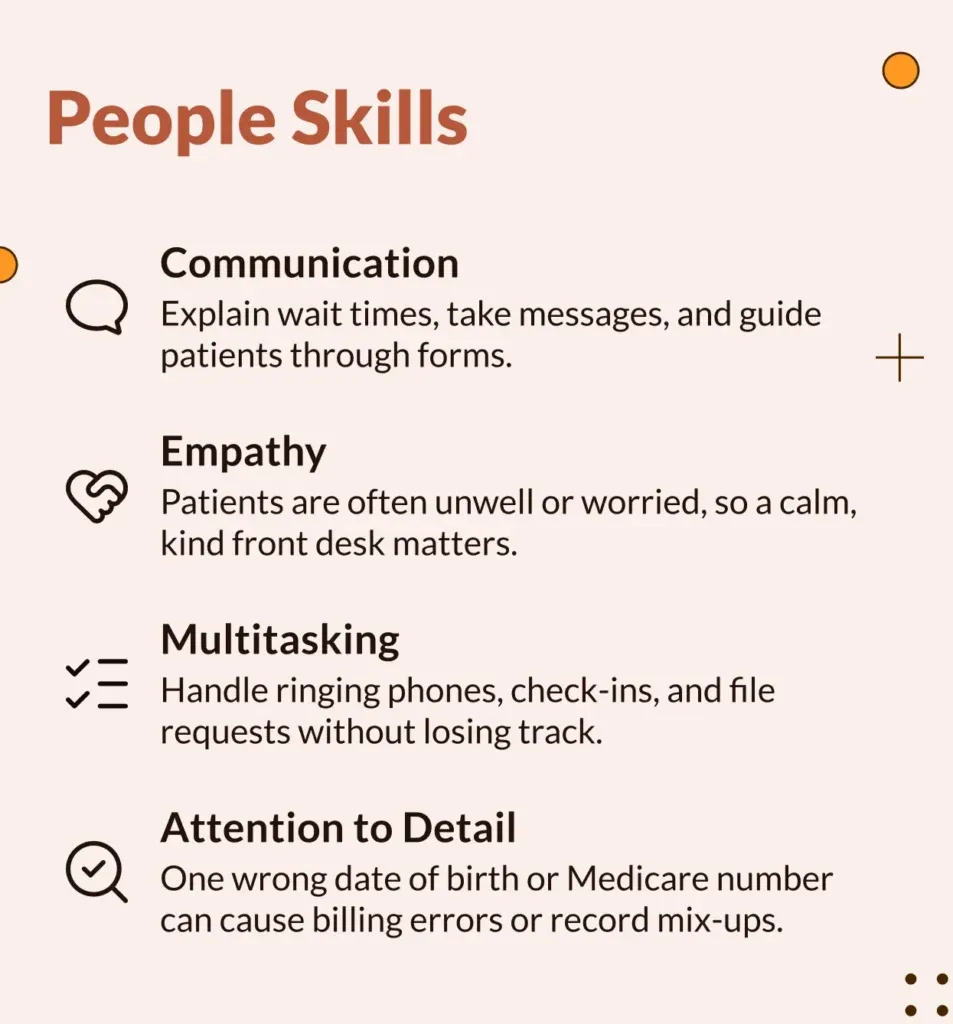
- Communication: you’ll explain wait times, take messages for doctors and talk patients through forms, often all in the same five minutes.
- Empathy: people visiting a clinic are often unwell, worried or in pain. A calm, kind front desk makes a real difference.
- Multitasking: phones ring while someone is checking in, and a doctor needs a file. Staying organised under pressure is a big part of the job.
- Attention to detail: a wrong date of birth or a mistyped Medicare number can cause billing errors or record mix-ups.
Technical skills
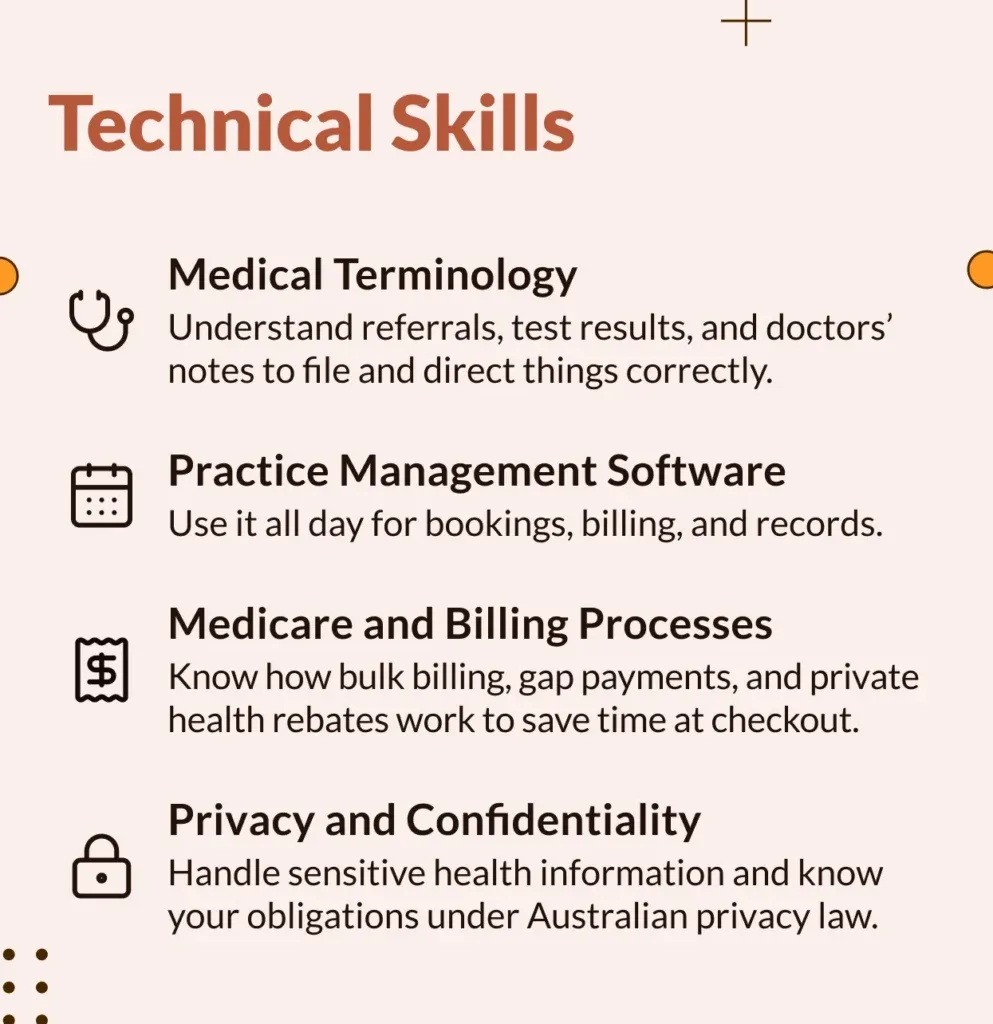
Privacy and confidentiality: you’ll handle sensitive health information, so knowing your obligations under Australian privacy law is essential.
Medical terminology: understanding the language on referrals, test results and doctors’ notes helps you file, book and direct things correctly.
Practice management software: you’ll use it all day for bookings, billing and records.
Medicare and billing processes: knowing how bulk billing, gap payments and private health rebates work saves time and confusion at checkout.
Do you need a qualification to become a medical receptionist?
No, there’s no legal requirement to hold a qualification. But it’s a competitive field, and most clinics prefer candidates who can hit the ground running. Getting a qualification under your belt shows employers you already understand medical terminology, patient records and privacy, so they spend less time training you.
There are two main ways to get there.
Nationally recognised qualifications
These are accredited, recognised across Australia and delivered by registered training organisations (RTOs):
- HLT37315 Certificate III in Health Administration: the most common entry point. It covers medical terminology, patient records, health care systems and workplace health and safety.
- HLT47321 Certificate IV in Health Administration: a step up for anyone aiming at senior admin or team leader roles, or for those who already have reception experience.
Short courses
If you want to build skills quickly, short courses are a flexible way to start. Popular options include medical terminology, medical reception and medical secretary courses. Many are non-accredited, so check what you’ll receive at the end, but they’re a fast, affordable way to add relevant skills to your resume.
Pair either option with your existing admin or customer service experience and your application will stand out.
How much does a medical receptionist earn?

Full-time medical receptionists in Australia typically earn around $57,000 to $65,000 a year, based on SEEK’s industry estimate for the role in healthcare services. For the latest figures by city, see SEEK’s medical receptionist salary guide.
For a broader benchmark, the median weekly earnings for receptionists across all industries is $1,175, according to Jobs and Skills Australia data reported by the Victorian Government.
Your actual pay will depend on:
- Experience: senior receptionists and team leaders earn more.
- Location: metro and regional rates can differ.
- Type of practice: specialist rooms, radiology and hospitals often pay differently to GP clinics.
- Hours: many roles are part-time or casual, so annual earnings vary with the hours you work.
Is medical reception a good career?
If you want steady work in a growing industry, it’s a solid choice. Health care is one of Australia’s largest and fastest-growing sectors, and the Victorian Government lists medical receptionists as in demand. Every GP clinic, specialist, dental practice and hospital needs someone at the front desk.
It’s also one of the more flexible career options in medical administration. Part-time, casual and shift-based roles are common, which makes it a good fit if you’re balancing family, study or a gradual career change. And because you can study online, you can get qualified without putting your life on hold.
Where can a medical receptionist career take you?
The front desk is a great launchpad. Once you’ve built some experience, you can move in a few directions:
- Practice management: step up to senior receptionist, then practice manager. A Certificate IV in Health Administration or Diploma of Practice Management can help you get there.
- Health administration: move into medical records, health information or hospital administration roles.
- Medical secretary: support specialists with correspondence, referrals and reports, often at a higher pay rate.
- Patient care: if you discover a passion for the clinical side, pathways like allied health assistance or a Diploma of Nursing (to become an enrolled nurse) build on what you’ve learned at the front desk.
Frequently asked questions
How long does it take to become a medical receptionist?
It depends on the path you choose. A short course can take a few weeks, while a Certificate III in Health Administration usually takes several months to a year, depending on the provider and your study load.
Can I become a medical receptionist with no experience?
Yes. Many people start with no medical background. Customer service or admin experience helps, and a course fills the gaps in medical terminology, records and billing.
Can I study to be a medical receptionist online?
Yes. Many medical reception courses and Certificate III in Health Administration programs are available online, so you can study around work and family.
Is medical reception a good career change?
For many people, yes. It’s a practical way to move into health care without years of study, and it puts your existing people and admin skills to work in a meaningful setting.
Ready to take your skills somewhere new?
You’ve already got the people skills. Now add the medical know-how. Explore medical receptionist courses you can start online and take the first step towards a career that matters.
